Dani Kubrusly

Buying

Buying a home in Florida: the full process, explained step by step

Most surprises in an American purchase are not about the house. They are about sequence, documents and costs nobody mentioned early enough. This is the sequence Dani walks through with every buyer.

Where do I start?

Start by defining the use, not the property. A home you will live in, a home you will visit a few times a year, and a home someone else will rent are three different purchases with three different criteria — and often three different regions.

Then write down your priorities in order. Space, commute, newness, walkability, lot size and budget rarely fit in the same home. Ranking them in advance turns an endless search into a short list.

Budget and total cost of ownership

The purchase price is only one line. Ownership in Florida also includes property taxes, insurance, possible HOA dues, possible CDD assessments in some newer communities, utilities and maintenance. None of these are fixed numbers you can copy from a website — they depend on the county, the community and the specific property, and they change over time.

The right move is to price them per property, in writing, before the offer — and to re-check them before closing, since insurance and tax estimates can change during the transaction.

Pre-approval and financing

In the United States, a serious offer usually travels with proof: a pre-approval letter if you are financing, or proof of funds if you are paying cash. Getting that document first protects you from falling in love with a price range that will not be approved.

Financing paths differ for residents, for buyers with US credit history and for foreign nationals buying from abroad. Requirements, down payment expectations and documentation are not the same in each case — which is why the financing conversation happens before the search, not after the offer.

Choosing an area

Central Florida is not one market. Communities differ in housing type, age of construction, access to highways and the airport, services nearby and how much new construction is still being delivered. Those differences — not a label — should decide where you look.

A practical filter: drive the route you would actually drive, on the day and time you would actually drive it. Regions that look identical on a map often feel nothing alike on a Tuesday morning.

Search, offer and negotiation

The search works best as a short, maintained shortlist rather than an endless feed. When a home fits, the offer is more than a number: it also proposes financing terms, deposit, inspection period, closing date and contingencies. Those terms are frequently what decides a negotiation.

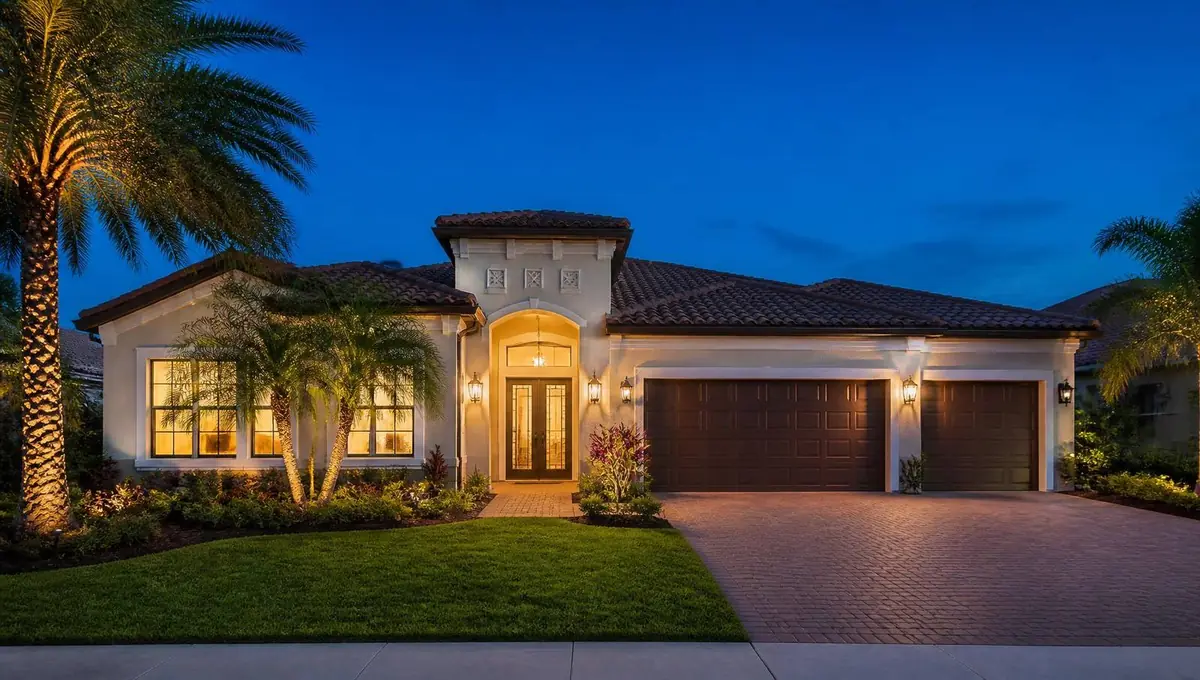
Central Florida — single-family housing stock, from resale to new build.

Central Florida — single-family housing stock, from resale to new build.

Inspection and appraisal

The inspection is your window to understand the property's real condition: roof, air conditioning, plumbing, electrical, water intrusion, structure. It is also the moment when repairs or credits can be renegotiated within the contract's timeline.

If you are financing, the lender orders an appraisal to confirm the value supporting the loan. When appraisal and contract price diverge, there is a defined set of options — renegotiate, cover the difference, or use the contingency — and knowing them in advance keeps the deal calm.

Closing

Closing involves title work, the settlement statement, insurance in place, funds wired under strict verification, and signature. Wire fraud is a real risk in the US market: banking instructions are always confirmed through a channel you initiated, never through an emailed change of account.

HOA, CDD, taxes and insurance

An HOA sets community rules and dues, and those rules can affect rentals, exterior changes, parking and pets. Some newer communities also carry a CDD, tied to infrastructure. Property taxes are assessed at county level, and insurance in Florida deserves its own conversation, including wind and flood considerations.

All four vary by property and change over time, so they are verified document by document during the transaction rather than estimated from generic figures.

Buying remotely, and what happens after closing

Remote purchases are routine: video tours with someone physically in the home, documents signed electronically where allowed, inspection reports reviewed together, and closing coordinated across time zones. What makes it work is not technology — it is having someone accountable on the ground.

After closing there is a second, quieter list: utilities, internet, homestead-related filings when applicable, service providers, and the first small repairs. Dani stays through that part too.

Frequent questions

The questions that come up first in almost every conversation.

Can a foreigner buy property in Florida?

Yes. Foreign nationals can own property in Florida. What changes is the documentation and the financing path — cash purchases and loans designed for foreign nationals follow different requirements than a conventional loan for someone with US credit history. Tax and immigration questions should be reviewed with a qualified professional in each field.

Do I need to be in Florida to buy?

No. The full process can be conducted remotely, from tours to closing, as long as someone local is genuinely responsible for verifying the property and coordinating deadlines.

How much should I budget beyond the purchase price?

It depends on the property, the county and the community, so a responsible answer is a per-property estimate rather than a generic percentage. The categories to price are taxes, insurance, HOA or CDD when they apply, closing costs, utilities and maintenance.

Does working with Dani cost me more on a new construction home?

Buyer representation on new construction is arranged with the builder at registration. The important part is registering with representation before your first visit, so you have someone on your side during pricing, options and inspection.

If your question is not here, that is exactly the one worth a conversation.

Next step

A thirty-minute conversation.

Goals, budget, timing and the regions that fit you — with no obligation.

Talk to Dani